
Description
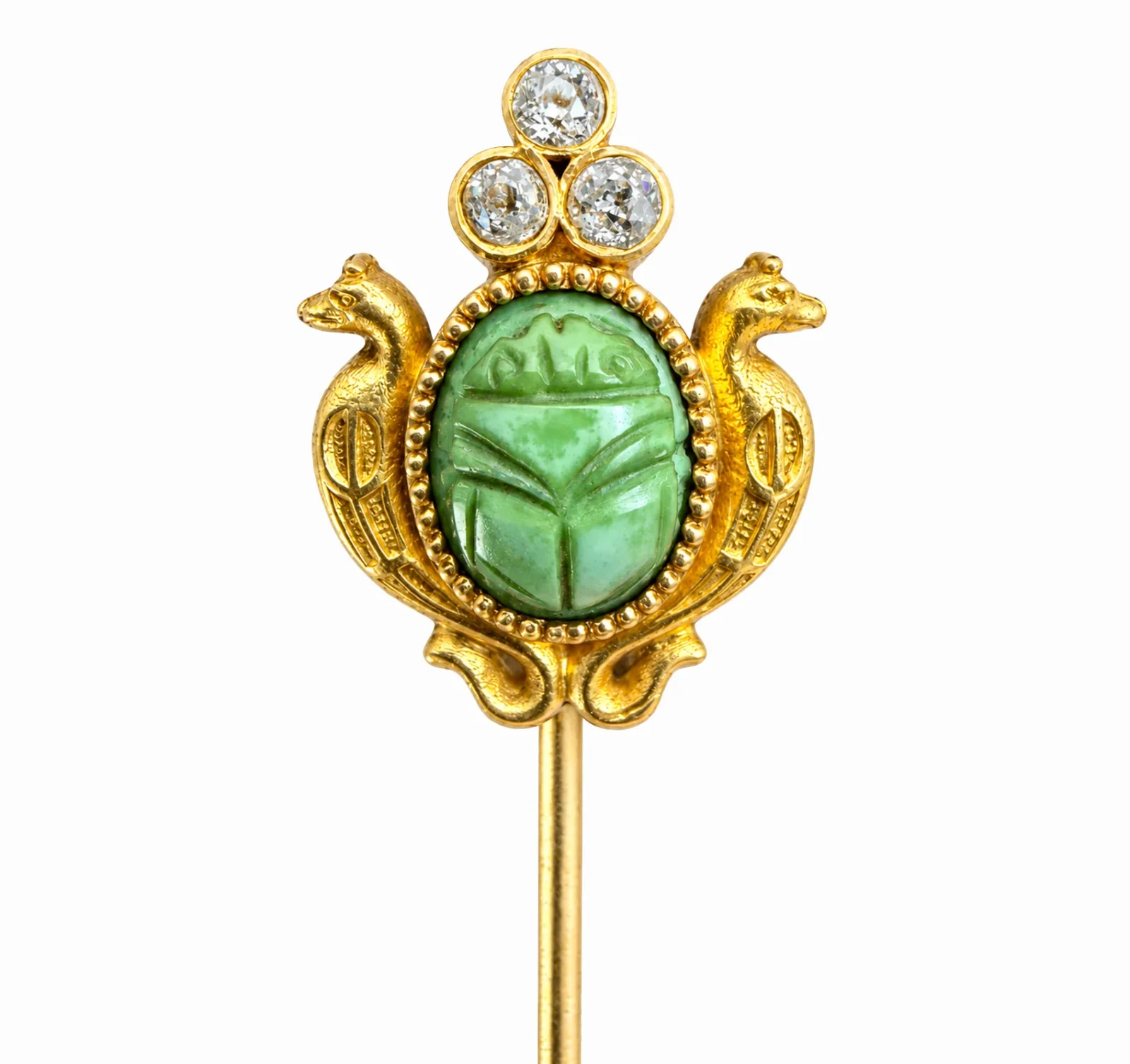
A Symbolic Turquoise Scarab Framed by Egyptian-Style Birds and Diamonds This striking Egyptian Revival stick pin centers upon a beautifully carved turquoise scarab , its softly varied green coloring lending natural character and depth to the stone. The carving defines the beetle’s head, wings and body with crisp, symmetrical lines. The scarab is secured within a beaded yellow gold surround and framed by a pair of finely detailed, mirrored bird figures. Their engraved feathers and stylized forms reinforce the Egyptian Revival character of the composition. Above the scarab, three round diamonds are individually set in gold and arranged in a trefoil formation, introducing brightness and balance to the richly symbolic design. Distinctive in both subject and workmanship, this gold stick pin combines carved hardstone, figural detailing and diamonds in a compact yet visually commanding jewel. It would make an exceptional addition to a collection of Egyptian Revival jewelry, antique stick pins or symbolic jewels. Key Features Style: Egyptian Revival Jewelry Type: Stick pin Metal: Yellow gold Principal Gemstone: Carved turquoise Carving: Scarab beetle Accent Gemstones: Three round diamonds Diamond Arrangement: Trefoil formation Design: Central scarab framed by mirrored Egyptian-style birds Detailing: Beaded gold surround and engraved figural decoration Condition: Excellent estate condition Collector’s Note The scarab was among the most enduring symbols of ancient Egypt, associated with the rising sun, renewal and rebirth. Its powerful symbolism later made it an important motif in Egyptian Revival jewelry. Here, the carved turquoise scarab, mirrored birds and trefoil of diamonds create an especially elaborate interpretation of this historic decorative tradition.